Back at the Desk: What Changed in Local Search While You Were Busy Running Your Business
Let’s address the four months of silence on this blog. I spent the spring telling clients that consistency beats intensity, then walked back to my own website and didn’t touch it until July. Physician, heal thyself. The client work got done, the shoemaker’s kids went barefoot, and here we are.
The good news about disappearing for a while: local search kept changing without me, and now there’s plenty to report. If you run a business anywhere between the Palm Springs tram and the Salton Sea and haven’t thought about any of this since spring, here’s what actually matters — and what you can safely ignore.
In this article
AI answers are now the front door
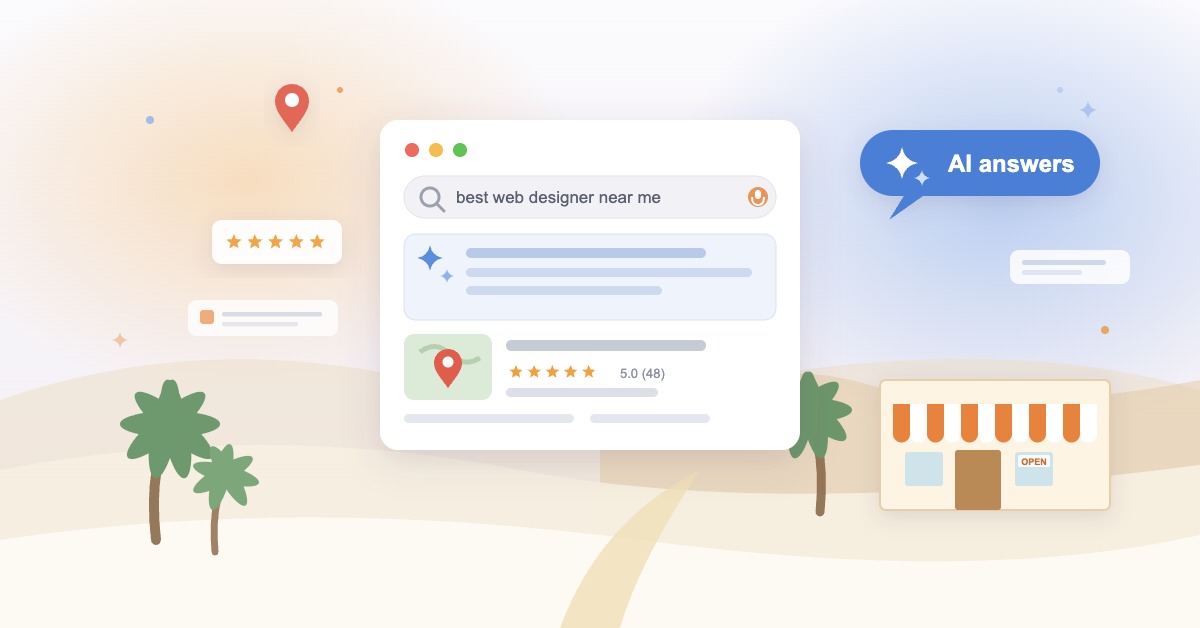
Back in March, AI-generated answers showed up on some searches. Now they sit on top of nearly everything a local business cares about — “best pool service in La Quinta,” “web designer near me,” “is that restaurant on El Paseo open Monday.” And a growing number of people skip Google entirely and just ask ChatGPT, which does not care how much you spent on your homepage slider.
Here’s the part worth your attention: those AI answers aren’t conjured from nothing. They’re assembled from your Google Business Profile, your reviews, and whether your website answers questions like a person instead of a brochure. The businesses showing up in AI answers aren’t running some secret playbook. Their hours are right, their reviews get answered, and their sites say what they do, where, and for how much. Revolutionary stuff.
Your Google Business Profile is quietly outworking your homepage
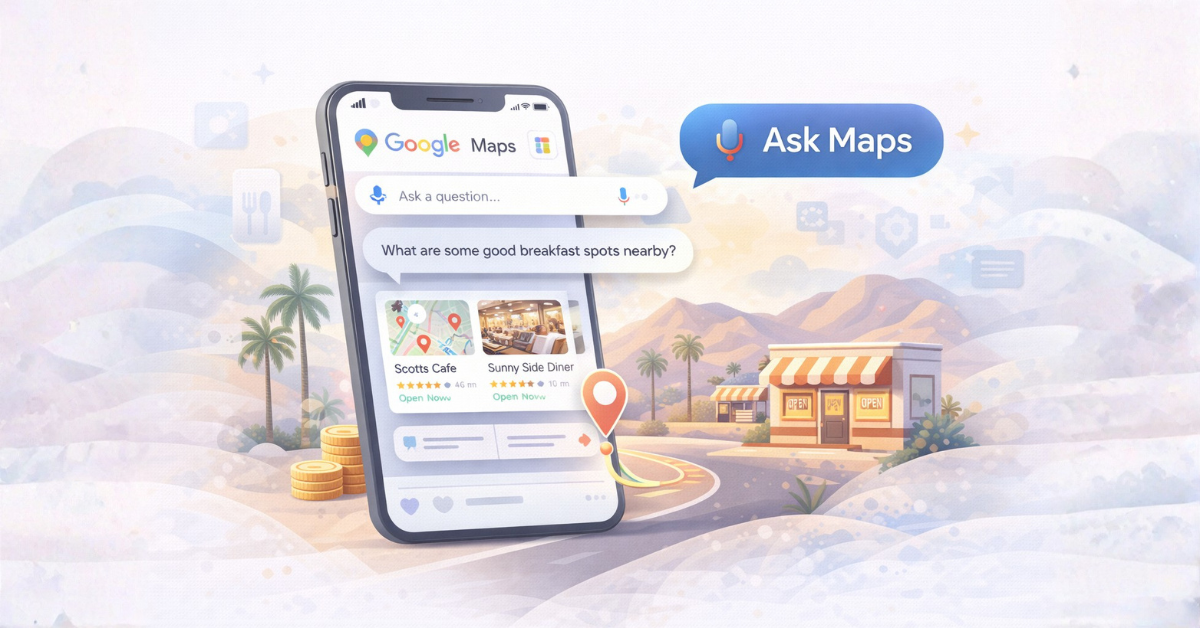
I’ve been saying this long enough that I’m starting to bore myself, but the data keeps agreeing: for a local business, the profile that shows up in Maps and AI answers does more first-impression work than your website. Maps keeps getting smarter about answering questions directly — the “Ask Maps” features I covered in March have kept right on expanding.
The practical version: correct categories, current hours, real photos taken this decade, and answered reviews — including the one-star review from the guy who was mad about the weather. Twenty minutes a month. Most businesses out here still won’t do it, which is exactly why it works for the ones who do.
What hasn’t changed
Fast sites still win. Real photos still beat stock photos of handshakes. A homepage that answers “what, where, how much” in one scroll still converts better than something clever. And contact forms still quietly leak leads — I ran an audit on my own site this month and found some numbers in the analytics I didn’t love. Still confirming what’s real and what’s bots being bots, because that’s the other thing about 2026: half your traffic report is fiction until you filter it.
Meanwhile: go test your contact form on your phone. All the way through. I’ll wait.
What to do before season
September in the desert arrives the way it always does — you blink after Labor Day and suddenly Highway 111 is full and everyone’s website matters again. Between now and then, in order of impact:
- Test your contact form on a phone. If you sigh before you finish it, your customers quit two fields ago.
- Open your Google Business Profile. Fix categories, hours, services. Add five photos that were actually taken at your business. Answer every review from the past year, even the weird ones.
- Read your homepage like a stranger. Snowbird lands on it in October — can they tell what you do, where you are, and roughly what it costs without scrolling? If not, that’s the fall project.
- Check your site speed on cellular. Season traffic is a phone in a parking lot in 108 degrees, not a desktop on fiber.
- Pick one channel you’ll still be doing in January. Monthly email, weekly post, whatever survives your busy season. Consistency beats intensity. Ask me how I know.
Common questions
Do I need an “AI strategy” for my small business?
No. You need current information, real reviews, and a website that answers questions plainly. That is the AI strategy. Anyone selling you a more complicated one is selling the complication.
Is SEO dead?
SEO has been declared dead more times than the mall, and like the mall, it’s still doing business — just differently. Fewer clicks from blue links, more visibility from being the business the AI answer cites. The work looks similar. The scoreboard changed.
Is this different in Palm Springs vs. the rest of the valley?
Meaningfully, yes. Palm Springs, Palm Desert, La Quinta, and the mid-valley cities each have their own search behavior and competition. I wrote about that in January, and it still holds — the desert is one region but it has never once behaved like one market.
Casey Dolan runs Casey Dolan Consulting out of La Quinta — clear, practical digital help for Coachella Valley businesses and nonprofits, with a firm no-upsell policy. If your website sat untouched all summer, no judgment; so did mine. Let’s talk.
Share this article

Written by : Casey Dolan
Casey Dolan is a website and digital marketing consultant with 20 years of experience helping businesses, nonprofits, and events make clearer decisions online. He works directly with clients on WordPress websites, SEO, paid media, and practical digital strategy—without the agency runaround.