Airspace Integration Website Case Study: A Scalable Platform for Growth
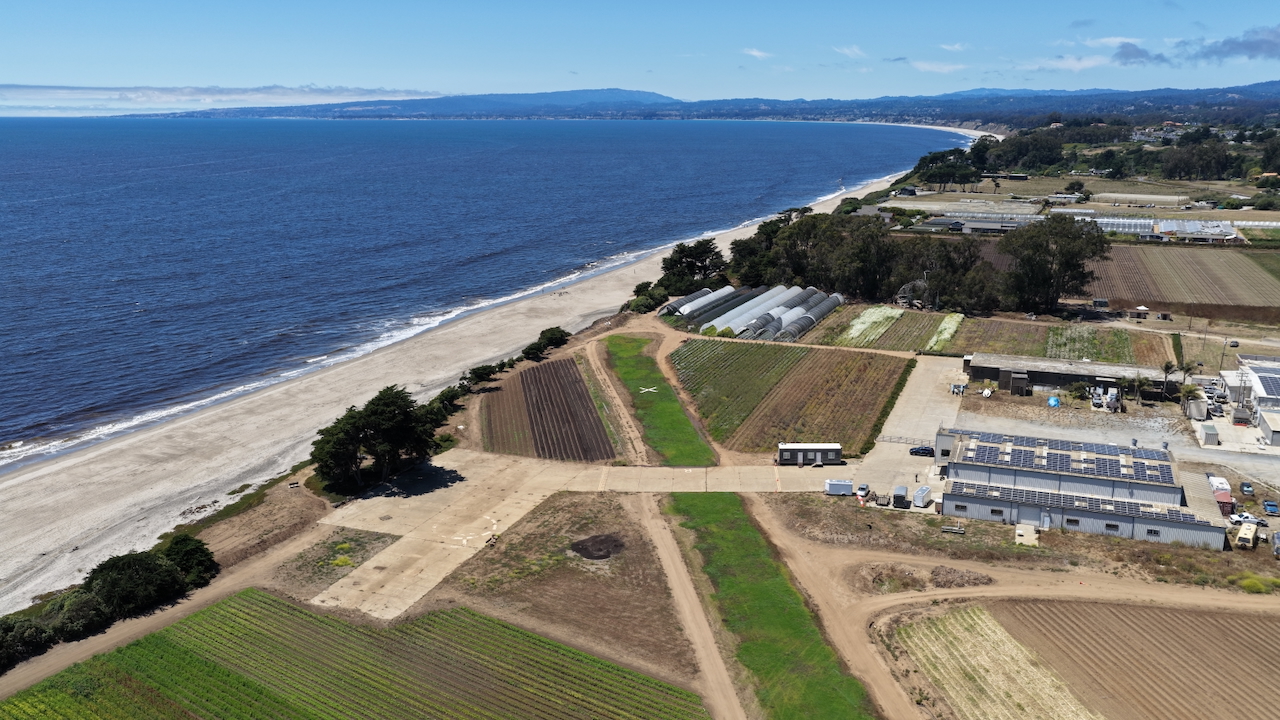
Airspace Integration needed more than a visual refresh. The organization needed a website that could explain a highly technical operation clearly, support new ranges and partnerships over time, and give researchers and collaborators a fast path to the information that matters. The result is a scalable WordPress platform built around clarity, structured content, reliable analytics, and easier ongoing management.
In this article
- Case Study Snapshot
- The Challenge: Make a Technical Organization Easy to Understand
- The Approach: Build a Content System That Can Grow
- The Solution: Clear Paths for Partners and Researchers
- Reducing Ongoing Work With Event Automation
- Strengthening Analytics and Search Visibility
- Supporting the Site After Launch
- Proof at a Glance
- The Outcome
- Planning a Website That Needs to Explain Something Complex?
Case Study Snapshot
- Client: Airspace Integration, an FAA-authorized UAS test range on California’s Central Coast
- Challenge: The previous website did not reflect the breadth of the organization’s capabilities or provide a scalable structure for future growth.
- Approach: Clarify the content architecture, build repeatable range and partner systems, automate event publishing, and clean up analytics and search foundations.
- Outcome: A modern, easier-to-navigate website that the team can expand without rebuilding its structure each time.
Airspace Integration operates as an FAA-authorized UAS test range on California’s Central Coast. They support research, development, and testing across uncrewed systems, robotics, automation, environmental sensing, aviation technologies, and more. Their environment includes a private-use runway, dedicated workspace and labs, and a variety of distinct test areas including coastal, beach, runway, and terrain-based ranges. The previous version of their site didn’t reflect the breadth of what they do or the clarity of their structure. The rebuild was an opportunity to make the experience more intuitive, more scalable, and more visually aligned with the work happening on the ground.
The Challenge: Make a Technical Organization Easy to Understand
The new homepage opens with a clean hero video, giving visitors an immediate sense of the landscape and the scale of operations. For a technical organization, this kind of visual grounding matters. It quickly establishes context and removes the guesswork about who Airspace Integration serves.
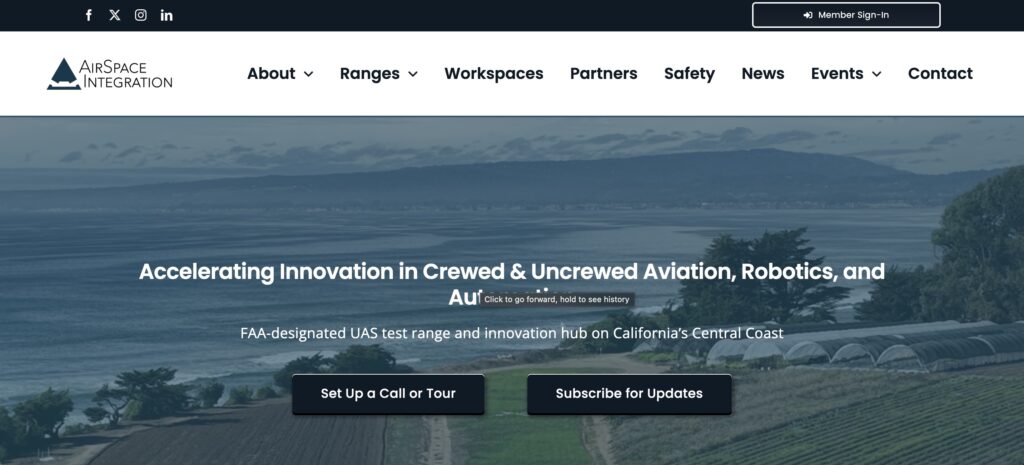
The homepage also introduces the major pillars of the site: ranges, workspace, tools and technology, events, partners, and safety. The goal was simplicity, not minimalism. The information is all there — it’s just arranged to be clear from the start.
The Approach: Build a Content System That Can Grow
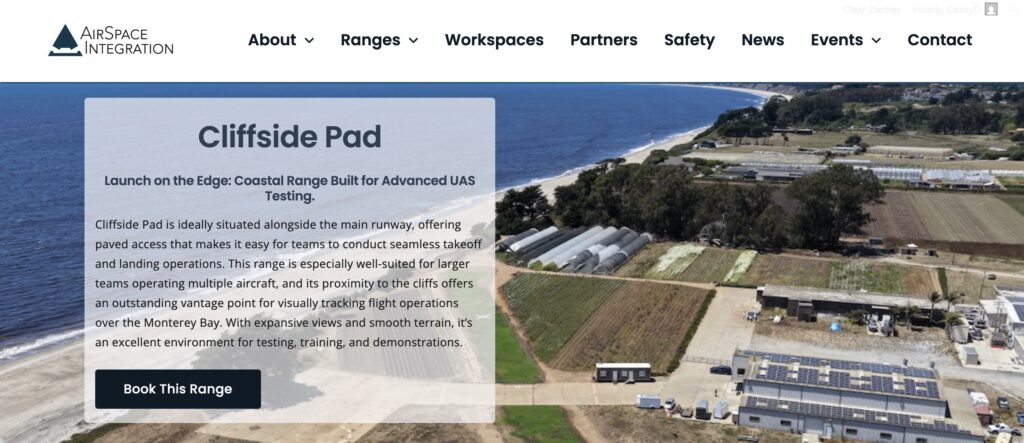
One of the most important decisions we made early on was how the site should grow. Airspace Integration is adding new capabilities, ranges, and partnerships over time, so the content framework needed to support expansion without breaking its structure. To do that, the site uses an Advanced Custom Fields (ACF) system to power the range pages and partner listings. In practice, this means each range — like the Cliffside Pad Range — follows a consistent layout while still allowing for very specific details. Location, capabilities, authorizations, operating conditions, images, maps, and supporting content are all part of the framework. When Airspace Integration adds a new range, they’re not reinventing the page; they’re simply filling out structured inputs that keep the site aligned and easy to navigate.
This approach is particularly helpful for organizations that expect their offerings to evolve. A solid content architecture saves time, prevents design drift, and keeps everything easier to maintain long-term.
The Solution: Clear Paths for Partners and Researchers
A technical organization doesn’t need a technical website — it needs a clear one. The navigation prioritizes what matters most: About, Ranges, Workspace, Tools and Tech, Safety, Partners, Events, and News. Everything that might matter to a partner or researcher is accessible within one or two clicks. The “Who We Are” section introduces Airspace Integration’s mission in a way that reflects both their capabilities and their collaborative approach. The “Workspace” section outlines the on-site offices, labs, and hangar space available to partners who need longer-term onsite work. And the “Our Community of Innovators” section highlights current partners with room to easily grow over time. It’s straightforward by design — the type of structure any organization can benefit from, whether you’re in aerospace, food service, consulting, real estate, or anything in between.
Reducing Ongoing Work With Event Automation

The site also includes a streamlined events system using The Events Calendar and its Aggregator feature. This lets Airspace Integration pull in upcoming events, workshops, and community activities automatically without needing to manually recreate each listing. Once the sources are set, the system keeps everything updated in the background. It’s a simple “set it and let it run” approach that keeps the Events page current while saving the team time and effort.
Strengthening Analytics and Search Visibility
A new website only performs well if the data behind it is accurate. During launch, I also fixed several legacy issues that affected tracking and visibility, including:
- reviewing and correcting Google Analytics setup
- verifying the domain and submitting the new sitemap in Google Search Console
- reviewing redirects and outdated URLs carried over from the previous build
- cleaning up indexing issues to ensure Google can correctly understand the new structure
This work is rarely the part people talk about, but it’s what helps a website perform well over time. Good structure plus good data is a combination every business benefits from.
Supporting the Site After Launch
Launch day is only part of the story. Websites evolve as organizations evolve. Updates, backups, and performance monitoring keep everything secure, fast, and stable. For teams who would rather focus on their mission than on WordPress updates, my complete website care plan keeps everything running quietly in the background.
Proof at a Glance
- Repeatable ACF-powered templates support new range and partner pages without rebuilding the layout.
- Event aggregation reduces the need to recreate listings manually.
- Google Analytics, Search Console, redirects, and sitemap foundations were reviewed and corrected during launch.
- Ongoing care covers updates, backups, performance monitoring, and site stability.
The Outcome
The finished site gives Airspace Integration a modern public presence, a consistent framework for ranges and partners, and a clean foundation for future growth. Just as importantly, the team can add capabilities, events, and partnerships without introducing design drift or recreating pages from scratch.
This project is a strong example of my approach to complex websites: understand the real operational need first, organize the information around the visitor, and build systems that remain useful after launch day.
Explore the new site: airspaceintegration.com
Planning a Website That Needs to Explain Something Complex?
If your organization has technical services, multiple audiences, or content that needs to grow over time, I can help turn that complexity into a website people can understand and your team can manage. Let’s talk about your project.
Share this article

Written by : Casey Dolan
Casey Dolan is a website and digital marketing consultant with more than 15 years of experience helping businesses, nonprofits, and events make clearer decisions online. He works directly with clients on WordPress websites, SEO, paid media, and practical digital strategy—without the agency runaround.
Related insights

October 23, 2026

September 10, 2026